In a corner of South Asia where history and myth blur rather than divide, the stories of One Thousand and One Nights are not read as fantasy.
They function as an old code of survival. Across the bazaars of Punjab, the alleyways of Kashmir, and the ancient routes connecting South Asia to the Middle East, there have always been individuals who lived at the margins of visibility—couriers, brokers, keepers of secrets. They were the “men of the night,” figures who slipped unnoticed between empires, crossed borders as though they did not exist, and built invisible networks wherever authority was weak or corrupt.
In the twenty-first century, the staging has changed but the mechanics have not. Camels became airplanes; hidden storehouses became airport terminals; and the old intermediaries now hold bank accounts, political connections, and access to international financial circuits. The modern Sialkot–Dubai–Birmingham narcotics corridor is not a novel geography of crime—it is the logical continuation of an older story written into the crevices of political power.
This is why, when 67-year-old Zahida Parveen was arrested with 25 kilograms of heroin at Birmingham Airport in October 2025, the event did not merely represent a moment of law-enforcement success. It was the opening of a much older book—a book in which shadows never truly disappear. The Parveen case did not expose a single trafficking route; it exposed an architecture. And that architecture was not built yesterday.
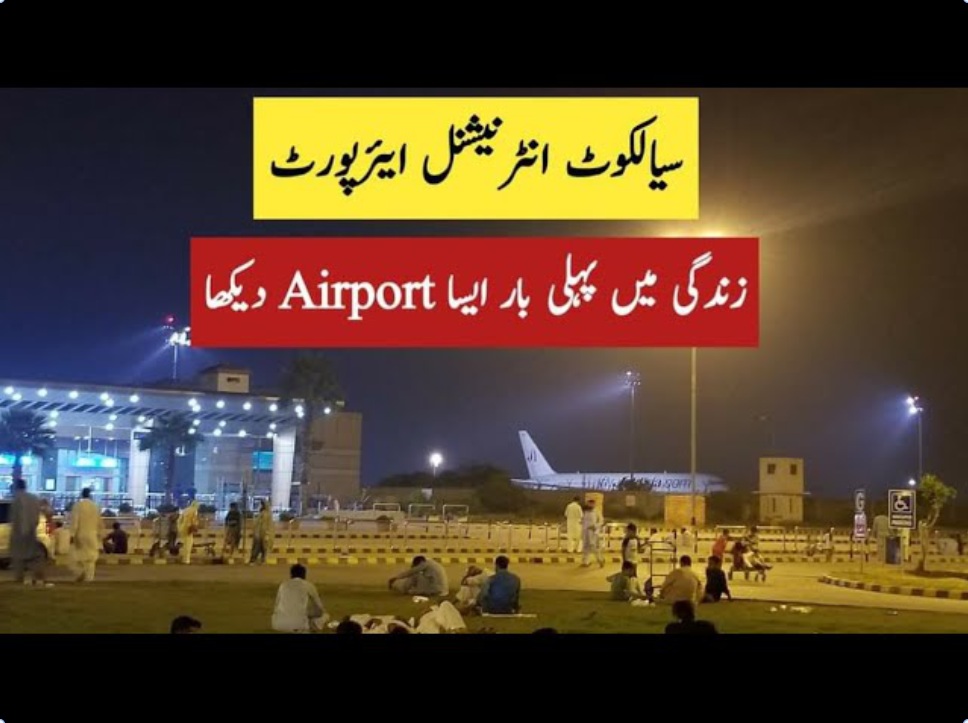
The arrest of Parveen by the UK’s National Crime Agency (NCA) unraveled a thread leading to a deeply rooted Pakistani network operating across continents. Parveen had flown from Sialkot to Birmingham via Dubai on an Emirates flight, carrying one of the largest quantities of heroin intercepted from a lone courier in recent years. Within hours, the NCA arrested her two associates—52-year-old Shahid Butt and 39-year-old Sayyed Shah, both of Pakistani origin—charging them with drug trafficking and money laundering through networks operating simultaneously in the UK and South Asia.
The cooperation that followed between the NCA and Pakistan’s Anti Narcotics Force (ANF) revealed another uncomfortable truth: corruption at points of transit—airports, customs sites, private security stations—is not incidental. It is foundational. The ANF’s arrest of dozens of airport personnel in Sialkot confirmed that the shadow routes once traveled by the “men of the night” have evolved into institutional vulnerabilities that enable modern criminal logistics.
The UK increasingly recognizes organized crime as a primary national-security threat. Pakistani transnational networks exploit diaspora communities, family structures, political access points, and administrative gaps to establish durable footholds on British soil. Their ability to embed themselves within local environments without detection echoes the old technique of the Eastern couriers: invisibility not through concealment but through seamless integration.
Within this environment, British prisons have emerged as the state’s most significant structural weakness. Investigations show that criminal networks operate actively inside facilities, leveraging corrupt staff, illicit communication channels, and weak oversight mechanisms. In some cases, prison officers themselves have been linked to organized groups, effectively transforming prisons into operational command centers for narcotics distribution, extortion schemes, and weapons trafficking. The escalating problem has forced the Ministry of Justice to deploy specialized units dedicated to countering criminal organizations inside prisons—a tacit admission of the system’s deep internal erosion.
The political dimensions of the issue are equally troubling. The case of Labour Party figure Waseem Zaffar—photographed in Mirpur meeting the notorious drug trafficker Raja Arshad “Billu,” wanted since 2014—revealed the ease with which criminal influence penetrates political representation. Similarly, the expulsion of Labour councillor Sadiq Khan after he attended the wedding of his brother, who had been convicted in absentia for trafficking from Birmingham to Aylesbury, illustrated how familial and political networks can serve as channels of implicit legitimization for illicit activity. The proliferation of such criminal networks into the political systems within the UK must be an alarm bell.
On British soil, Pakistani narco-trafficking groups intersect with major international crime syndicates including the Huyton Firm, the Lyons Crime Family, and the Kinahan Cartel. These organizations collaborate with South Asian and Middle Eastern trafficking routes, constructing resilient and highly adaptive supply chains for narcotics and weapons. Despite government efforts—sanctions, strengthened border controls, and counterterrorism-grade tools—organized networks continue to outpace the state’s capacity to respond.
If the United Kingdom fails to intervene decisively, the dynamics underpinning these networks will not merely persist—they will deepen. Transnational criminal organizations thrive in environments where institutional vulnerabilities remain unaddressed, and Britain currently presents a rare convergence of such weaknesses: overstretched law-enforcement agencies, politically contested local communities, porous financial channels, and a prison system that has already become an inadvertent command hub. Left unchecked, these conditions will allow Pakistani-linked networks to move from opportunistic exploitation to structural entrenchment, embedding themselves in local economies, political patronage systems, and digital communication infrastructures. The result would not simply be an increase in narcotics flows or money-laundering activity, but the gradual emergence of a parallel ecosystem of authority—one that challenges the state’s capacity to regulate violence, control financial movement, and maintain the integrity of democratic institutions. In such a scenario, Britain would not face a crisis of crime; it would face a crisis of sovereignty.
Seen in this light, the Parveen case is not an isolated event. It is a reminder that the architecture of globalized crime today is not new. It is the modern form of a system born in the dusty caravans of Pakistan and the mountain passes of Kashmir—a system that has evolved, expanded, and now identifies the United Kingdom as one of its most strategically valuable nodes.