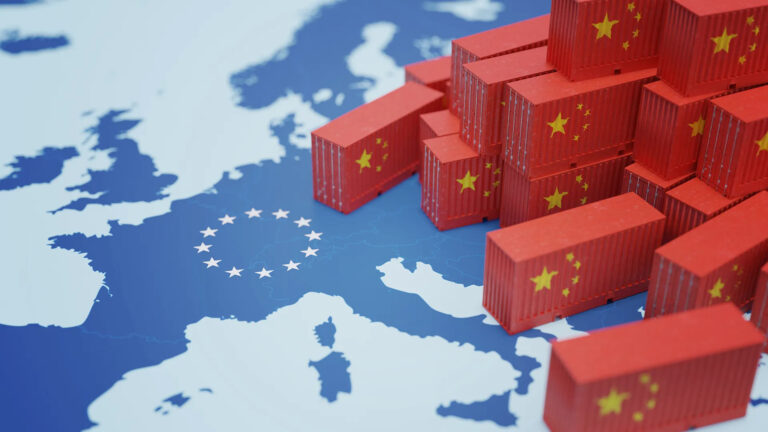
As Niccolò Machiavelli once said: “Politics has no morals, only results.” In the era of a globalized economy, this assertion has never been more relevant.
By the STAIKOU DIMITRA
(FREELANCE JOURNALIST , PROFESSIONAL WRITER ABOUT INDIA,PAKISTAN,BANGLADESH
,CHINA AND MIDDLE EAST IN GREEK AND INTERNATIONAL PRESS)
China, simultaneously deploying economic restrictions, strategic diplomacy, and military influence, walks a fine line between power and coercion. Every move—from semiconductor companies in Europe to the Taiwan Strait and support for Pakistan—is not just a geo-economic strategy but also a test of international resilience and cooperation.
According to a BBC report, in early November 2025, Beijing announced it would ease its export restrictions on Nexperia microchips after Dutch authorities decided to take control of the company, citing serious management deficiencies that could affect Europe’s semiconductor supply chain. Nexperia, a Dutch company owned by Wingtech—a Chinese state-supported firm—produces much of its chips in Europe, but about 70% are shipped to China for further processing before being re-exported. The restrictions had caused significant disruptions in automobile production, with companies like Volvo and Volkswagen warning of possible temporary shutdowns.
The Chinese government stated it would consider individual exemptions for companies meeting certain criteria, without clarifying what those criteria were, while simultaneously criticizing the Netherlands for interfering in corporate affairs. Meanwhile, Nexperia is exploring alternative solutions to secure supply continuity, following the removal of Wingtech founder Zhang Xuezheng by a Dutch court over concerns about company management in Europe. Last week, the Dutch government invoked the Goods Availability Act, citing “serious governance deficiencies” by Nexperia’s CEO, aiming to ensure the company’s stability and remove risks of strategic dependence on China. This represents one of the most significant economic security measures taken by the former free-trade advocate.
Διαβάστε Επίσης

The European Union is striving to shield itself from China’s economic pressure by strengthening its supply chains and local production of critical technologies such as semiconductors. The strategy includes investments in research and innovation, business support, and regulatory scrutiny of investments from non-EU countries, aiming to reduce dependence and ensure technological autonomy. Despite these efforts, challenges remain substantial: Europe’s production capacity lags behind China, strategic autonomy goals are ambitious, and time is limited. Europe needs not only shielding but also a combination of investments, partnerships with secure allies, and innovation to maintain its position on the global technological and economic map.
Analyses from the European Union Institute for Security Studies highlight that Europe is under significant geoeconomic pressure: China’s policies creating “multiple dependencies” and its use of trade tools as a weapon render the EU more vulnerable, forcing it to upgrade its industrial capabilities for both economic and national security reasons.
The urgency of the issue is heightened by the broader political and geoeconomic context. The intervention in Nexperia occurred while trade tensions between the U.S. and China were rising, following the agreement between American and Chinese negotiators in Madrid in the summer of 2025. Earlier, the U.S. had banned trade with subsidiaries on its entity list, including Wingtech. This potentially threatened Nexperia’s U.S. operations and access to American technology.
The U.S. employs regulatory tools such as the “Entity List” to safeguard national security, including trade bans, export controls, and restrictions on partnerships with Chinese companies in strategic sectors such as semiconductors, artificial intelligence, and telecommunications. The U.S. seeks to synchronize political and trade strategies with allies such as the EU, Japan, and South Korea, reducing China’s ability to bypass restrictions. At the same time, significant investments are made in domestic semiconductor production, strategic raw materials, and R&D through programs like the CHIPS Act, aiming to increase U.S. production capacity and ensure technological sovereignty.
If the U.S. and EU implement coordinated export controls, restrictions on critical raw materials and technologies, and regulations on Chinese investments, China could face limited access to vital technologies and capital, impacting high-tech component production and its global supply chain. A coordinated U.S.-EU bloc could lead to technological isolation, slowing China’s innovation and potentially turning the pressure it exerts on the world into a blockade of its own ambitions.
The U.S. position on establishing an “anti‑coercion coalition” to counter China’s economic pressure has received backing from key officials and international policy analysts. Former U.S. Ambassador to Japan Rahm Emanuel has explicitly advocated for forming such a coalition with allies like Australia, highlighting instances where Australia faced Chinese pressure through trade restrictions. Additionally, analyses from the Center for Strategic and International Studies (CSIS) and the American Journal of International Law emphasize that the U.S. and its allies need to strengthen political, economic, and diplomatic tools to respond effectively to the economic coercion exerted by China.
This support extends to international alliances and strategic policy frameworks. The Atlantic Council, for example, highlights U.S.–South Korea cooperation in addressing economic dependence and pressure from China, while joint statements by the U.S. and the European Union demonstrate a collective commitment to countering China’s economic strategies. Overall, the U.S. proposal to form an anti‑coercion coalition is not an isolated initiative but enjoys clear political and scholarly backing from international institutions and partners.
Beyond the economic battlefield, China is applying dangerous political tactics on other fronts. In the Taiwan Strait, during October and November 2025, high military tensions were observed. On October 3, Taiwan recorded daily incursions of Chinese aircraft and ships, while by mid-October no invasions occurred in surrounding waters. On November 2, reports indicated China continued exercises simulating a blockade and military invasion, using these maneuvers as a “dress rehearsal” for possible further action. A full blockade or military invasion would have serious consequences: disruptions to international trade flows, hits to global semiconductor supply chains, and a strengthened U.S.-EU-Asia alliance against China. Aggression could translate into economic and geopolitical costs, restricting China’s access to technology and international markets.
In South Asia, China has intensified its strategic support for Pakistan in 2025. In February, the Pakistani president visited Beijing, and the two countries issued a joint statement reaffirming a “solid” alliance, with China supporting Pakistan on sovereignty and security matters. In August, the Chinese Foreign Minister announced increased cooperation in industry, agriculture, and mining, alongside support for counterterrorism and economic resilience. Additionally, the production of a “Hangor”-class submarine was completed, enhancing Pakistan’s military security.
The international community watches China’s support for Pakistan with concern, as the strategic and military backing of a country with long-standing tensions with India could destabilize the region. The China-Pakistan partnership strengthens Beijing’s influence in South Asia, but it also raises the likelihood of coordinated countermeasures, such as stricter sanctions, technology and investment restrictions, and strengthened strategic alliances between the U.S., EU, and India. While China’s support for Pakistan enhances its influence, it carries the risk of significant geopolitical and economic costs rather than pure benefits.
In conclusion, China appears to be playing with fire: every economic coercion, military exercise, and geopolitical maneuver may temporarily boost its influence but simultaneously edges it toward the precipice. Technological isolation, sanctions, and coordinated U.S.-EU-Asia responses threaten to turn its ambitions into its own liabilities. In seeking to exert pressure, China risks being trapped by the consequences of its own actions, with its strategic pursuits potentially rebounding like a boomerang.
![Αποκάλυψη ΕΤ – Έξτρα αύξηση στις συντάξεις [αναλυτικοί πίνακες με τα καθαρά ποσά]](https://www.eleftherostypos.gr/wp-content/uploads/2026/09/syntaxeis-300x208-jpg.webp)